Guide
Whale and dolphin watching in Tenerife: what you see, what the law says and how to spot an authorised boat
Whales and dolphins in Tenerife: resident short-finned pilot whales and bottlenose dolphins, the Teno-Rasca strip, legal distances, the Barco Azul flag, departure ports and typical duration.
In short
Short-finned pilot whales and bottlenose dolphins live year-round in south-west Tenerife, in the Teno-Rasca Marine Strip special area of conservation. The law requires boats to stay at least 60 m away, travel at 4 knots at most within 500 m and spend no more than 30 minutes within 100 m of the animals. Trips leave from Los Cristianos, Puerto Colón and Los Gigantes.
Tenerife is one of the places in Europe where you regularly see cetaceans from a boat, because two species live here all year. This guide explains which ones, where, under what rules approaching is allowed and which ports the boats leave from.
We read the text of the Canary Decree 178/2000 as published in the BOC, Royal Decree 1727/2007 on the Ministry's site and MITECO and Canary government pages; for species and durations we also rely on travel guides and say so. We give no prices as they vary by boat and season.
Ready to book
- Whale and dolphin watching by catamaran from Puerto Colón with Eden Catamaranfrom €35 · 2 h–3 h Book on GetYourGuide (opens in a new tab)
- 5 hour schooner trip with whale watching, lunch and the Los Gigantes cliffs with Neptunofrom €58 · 5 h Book on GetYourGuide (opens in a new tab)
- Whale and dolphin safari on an eco-yacht from Los Cristianos with Travelin' Ladyfrom €38 · 1.5 h Book on GetYourGuide (opens in a new tab)
Some of the links are affiliate links: a booking may earn us a commission, at no extra cost to you. What affiliate links are
Which species you see and when
The short-finned pilot whale and the bottlenose dolphin keep resident populations all year in the Teno-Rasca marine strip, and both are listed as vulnerable, according to MITECO's panel. A travel guide adds that spotted and common dolphins appear often but are not guaranteed, and that fin whales and sperm whales only pass through on migration routes.
Because the residents are here all year, there is no bad time to see cetaceans in general. The same guide quotes Turismo de Tenerife saying May and June bring the most variety of species, while in winter sightings are mostly limited to the residents; another source gives December to May as the best time. There is no guarantee of a sighting in any case.
The Teno-Rasca ZEC
The Teno-Rasca Marine Strip special area of conservation covers about 69,490 hectares in western Tenerife, according to MITECO's panel, and was declared a ZEC by Order ARM/2417/2011. The Ministry has warned of the sharp rise in tourism and boat traffic there, and has published a communication on the need for a moratorium on new recreational whale-watching authorisations in the area. We could not confirm whether that moratorium has been approved.
The Canary government monitors the area with the vessel Mar Canario, based in Puerto Colón since 2018, and has presented a new hybrid vessel to reinforce that monitoring.
The rules: distances, speed and time
Two rules apply. Royal Decree 1727/2007 defines an exclusion zone of at least 60 m from the animal or group, inside a moving protection space of 500 m, and requires administrative authorisation from MITECO for companies. In that space you may not feed the animals or throw rubbish, block their path, separate groups, make loud noises or use sonar; speed must not exceed 4 knots, boats do not circle the animals and approach at an angle of about 30° to their course.
The Canary Decree 178/2000 (BOC no. 133, 6 October 2000) sets, in the text we read: no approach closer than 60 m, no more than 4 knots within 500 m, no diving or swimming within 500 m, and no staying more than 30 minutes within 100 m of an animal or group. If two boats are already within 100 m, no other may enter; if three are within 500 m, likewise. We have not checked later amendments to the decree; MITECO says the state and regional regulation in force both apply.
The 'Barco Azul' mark
Decree 178/2000 (art. 15 and annex IV) requires boats of authorised tourism companies to carry the Barco Azul flag in a visible place: Canarian yellow, 80 × 50 cm, with the Barco Azul emblem and two white pilot whales on a blue background, and below it, in blue figures, the period the authorisation covers. The tourism department issues it with the authorisation and it is renewed every year.
In practice, check whether the boat flies it on the mast. It is a Canary Islands mark; in addition the company needs the Ministry's authorisation. If an offer does not mention these authorisations, ask before booking.
Departure ports and duration
According to the guides we consulted, boats leave from Los Cristianos (the short option, of about 1 h 30), Puerto Colón in Costa Adeje (catamarans of 2 to 3 hours, sometimes with a swim and food) and Los Gigantes (about two hours, beside the cliffs, and sometimes with a stop to swim in Masca bay). Trips with food reach 5 hours and those combined with Masca fill the whole day, 7 to 9 hours.
Playa San Juan appears on Turismo de Tenerife's map as a port in the sighting area, but there is no concrete offer of departures from there. Confirm port, time and duration with each company.
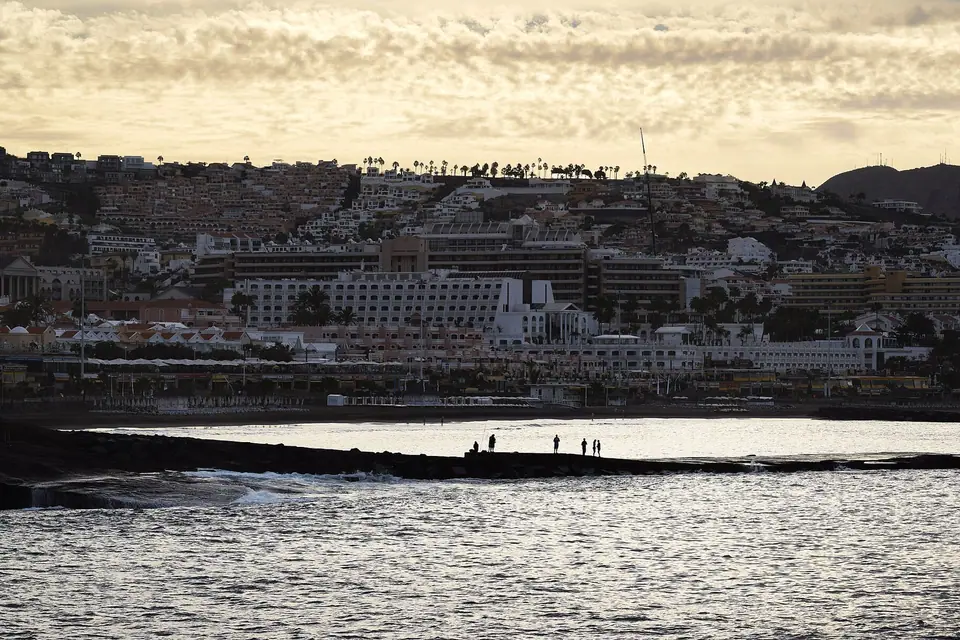
Whale and dolphin watching by catamaran from Puerto Colón with Eden Catamaran
A 2 or 3 hour catamaran trip from Puerto Colón to look for pilot whales and dolphins, with drinks on board and a swim stop on the longer option.
Neptuno Whale Experience Tenerife
Whale and dolphin watching on a wooden schooner from Los Cristianos with Neptuno
A trip of about 2 hours on a wooden boat from Los Cristianos looking for dolphins and pilot whales, with a swim stop if the sea allows.
Neptuno Whale Experience Tenerife
5 hour schooner trip with whale watching, lunch and the Los Gigantes cliffs with Neptuno
A 5 hour outing on a wooden sailing boat from Puerto Colón, with cetacean watching, lunch on board and a coastal run to the Los Gigantes cliffs.
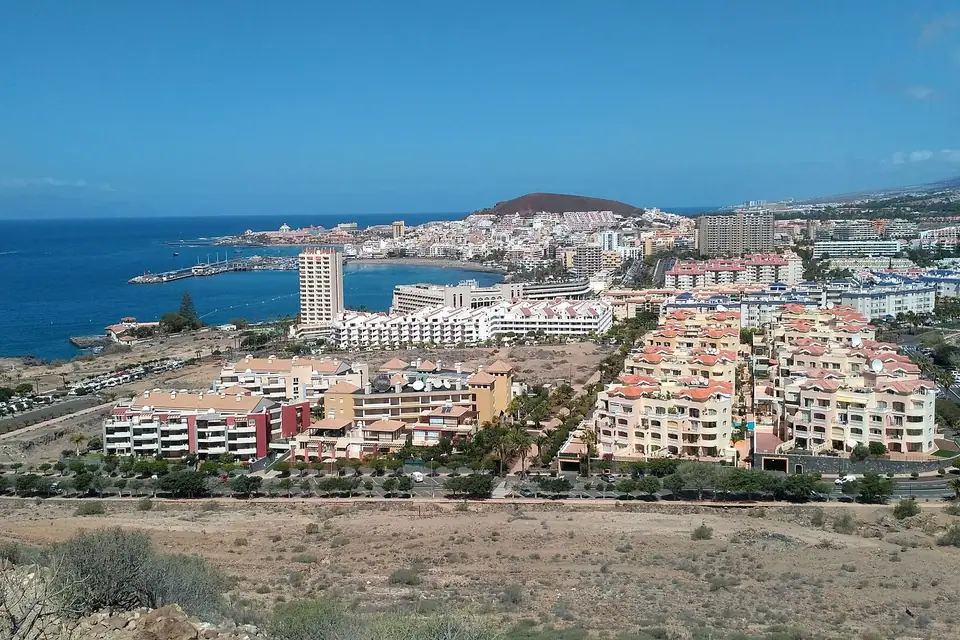
Whale and dolphin safari on an eco-yacht from Los Cristianos with Travelin' Lady
Roughly 90 minute eco-yacht trip from Los Cristianos pier to see whales and dolphins, with a swim named in the listing title.
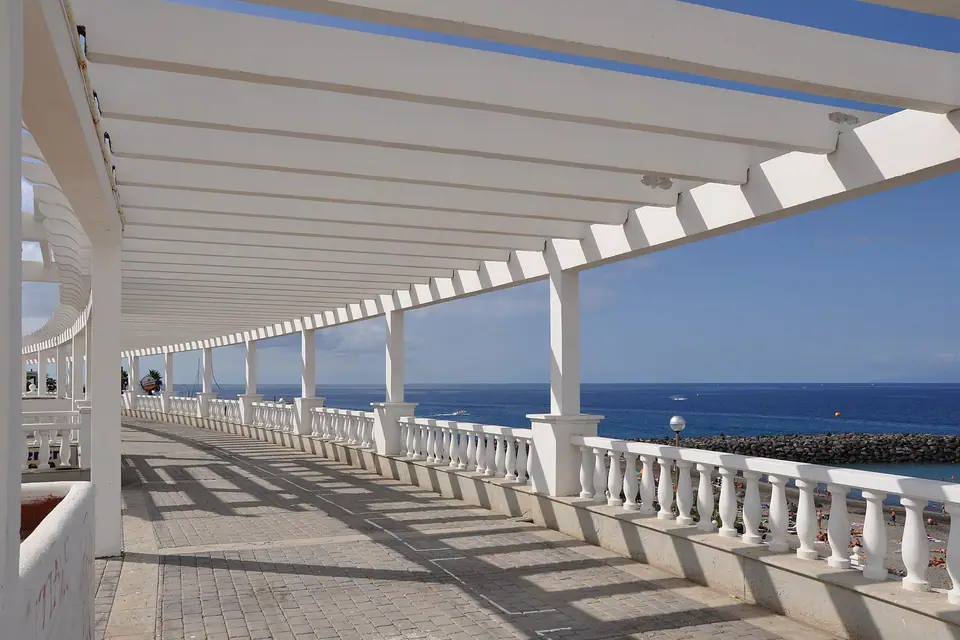
2 hour mini cruise with whale and dolphin watching from Puerto Colón with Tenerife Dolphin
A 2 hour catamaran from Puerto Colón with a multilingual guide and free transport from the main southern hotels, per the operator's site.
4.5 hour catamaran to Masca and Los Gigantes with whale watching and lunch with Freebird
A 4.5 hour catamaran trip along the southwest coast with cetacean watching, lunch, drinks and a swim in Masca bay if the sea allows.

3 hour sailboat trip with whales and dolphins from Puerto Colón with White Tenerife
A trip of about 3 hours on a sailboat from Puerto Colón looking for cetaceans, with the eco-catamaran and glass-floor catamaran as alternatives.
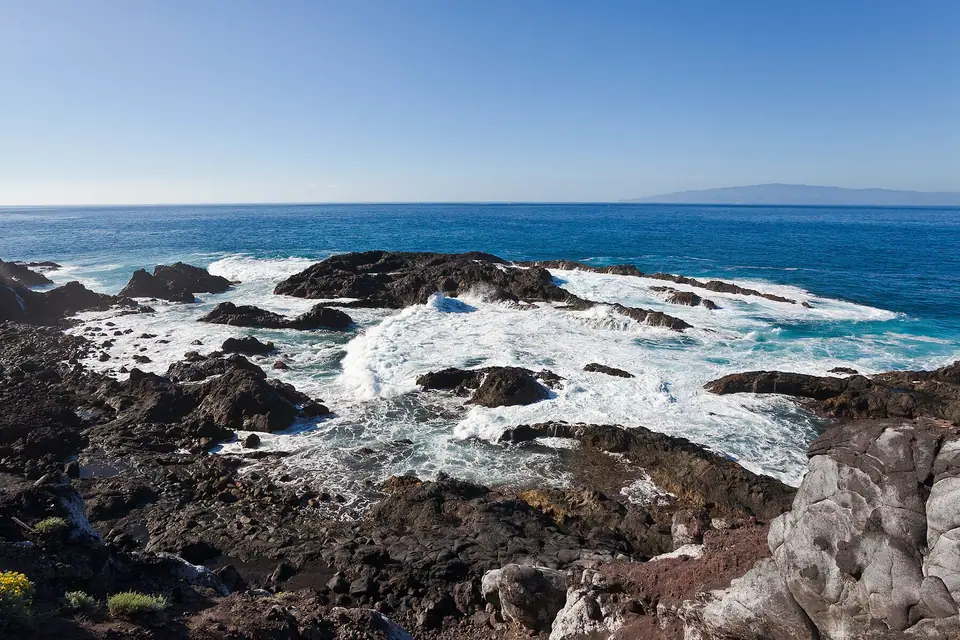
Whale and dolphin watching and a swim at Masca from Los Gigantes with Marítima Acantilados
A trip of about 2 hours from Los Gigantes to watch whales or dolphins, with a run past the cliffs and an optional swim or snorkel in Masca bay.
Pirate boat with whales, dolphins and a swim at Masca from Los Gigantes with Flipper Uno
A 2 to 3 hour trip from Los Gigantes pier on a pirate-style boat, looking for cetaceans with a swim in Masca bay.
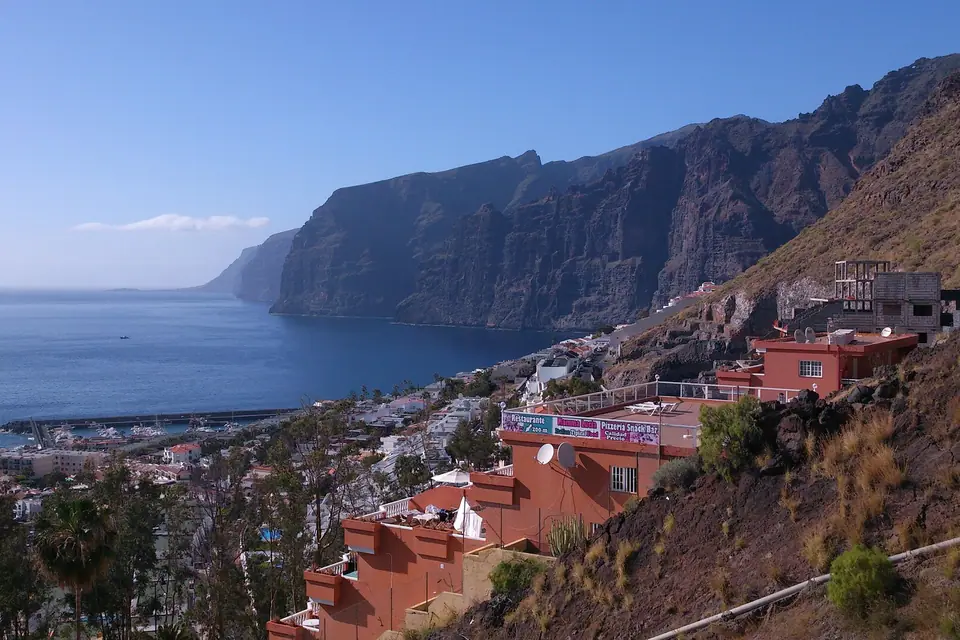
Small-group sailboat with cetaceans and snorkelling under the Los Gigantes cliffs with Picarus
A sailboat of about 14 metres taking at most 9 people from Los Gigantes marina, with cetacean watching, a swim or snorkel and an optional snack.
Whale and dolphin watching with a local skipper from Las Galletas with Tonina Cruises
A trip of about 3 hours from the Las Galletas breakwater on the south coast with a local skipper looking for whales and dolphins.
Official sources
Written by us from these sources, consulted up to 25 November 2026. Rules and traffic restrictions change, so check them before travelling.
- BOC: Decree 178/2000 on cetacean watching in the Canary Islands
- MITECO: recreational cetacean watching (AROC)
- MITECO: Teno-Rasca ZEC panel
- MITECO: communication on the moratorium on new AROC authorisations
- Canary government: marine monitoring of Teno-Rasca
- La Maleta Inquieta: whale watching in Tenerife (travel guide)
Frequently asked questions
Which cetaceans live in Tenerife all year?
The short-finned pilot whale and the bottlenose dolphin, both with resident populations in the Teno-Rasca marine strip and listed as vulnerable, according to MITECO.
How close can a boat get?
Never closer than 60 m. Within 500 m, at 4 knots at most, and no more than 30 minutes within 100 m of an animal or group (Canary Decree 178/2000).
What is the Barco Azul mark?
A yellow 80 × 50 cm flag with the Barco Azul emblem and the authorisation period in blue figures, which boats authorised by the Canary Islands must display.
Which ports do the boats leave from?
Los Cristianos, Puerto Colón (Costa Adeje) and Los Gigantes, according to the guides. Playa San Juan appears as a port of the area on Turismo de Tenerife's map, with no concrete offer that we saw.
How long does the trip last?
From 1 h 30 (short trip from Los Cristianos) to 5 hours with food; those combined with Masca take 7 to 9 hours, according to the guides.
Is there a best time to see cetaceans?
The residents are here all year. A guide quoting Turismo de Tenerife gives May and June as the months with most variety; another, December to May. None guarantees a sighting.
Atlas de Tenerife editorial team · reviewed on 25 November 2026
More guides
- Ferry from Los Cristianos to San Sebastián de La Gomera: about 50 minutes, two operators and a day trip
- What to see in Tenerife: from Teide to Anaga, with the northern towns and the southern beaches
- How to get up Teide: the cable car to 3,555 m, the summit permit and what wind and snow do
- Tenerife in winter (November to March): temperatures, rain, snow on Teide, calima and festivals
- Tenerife on a rainy day
- Tenerife with children
- Free and low-cost plans on Tenerife
- Effortless things to do on Tenerife